
If you’re in nursing school or getting ready for nursing school, chances are, you are or will be juggling classes, clinicals, exams, caffeine dependency, and probably questioning your life choices at least once a week. Trust me—you’re not alone. Nursing school is tough, but it doesn’t have to feel impossible. You just need tools that actually help. That’s where smart study strategies come in—and that’s why I created these free Med/Surg and Maternal Newborn cheat sheets for you.
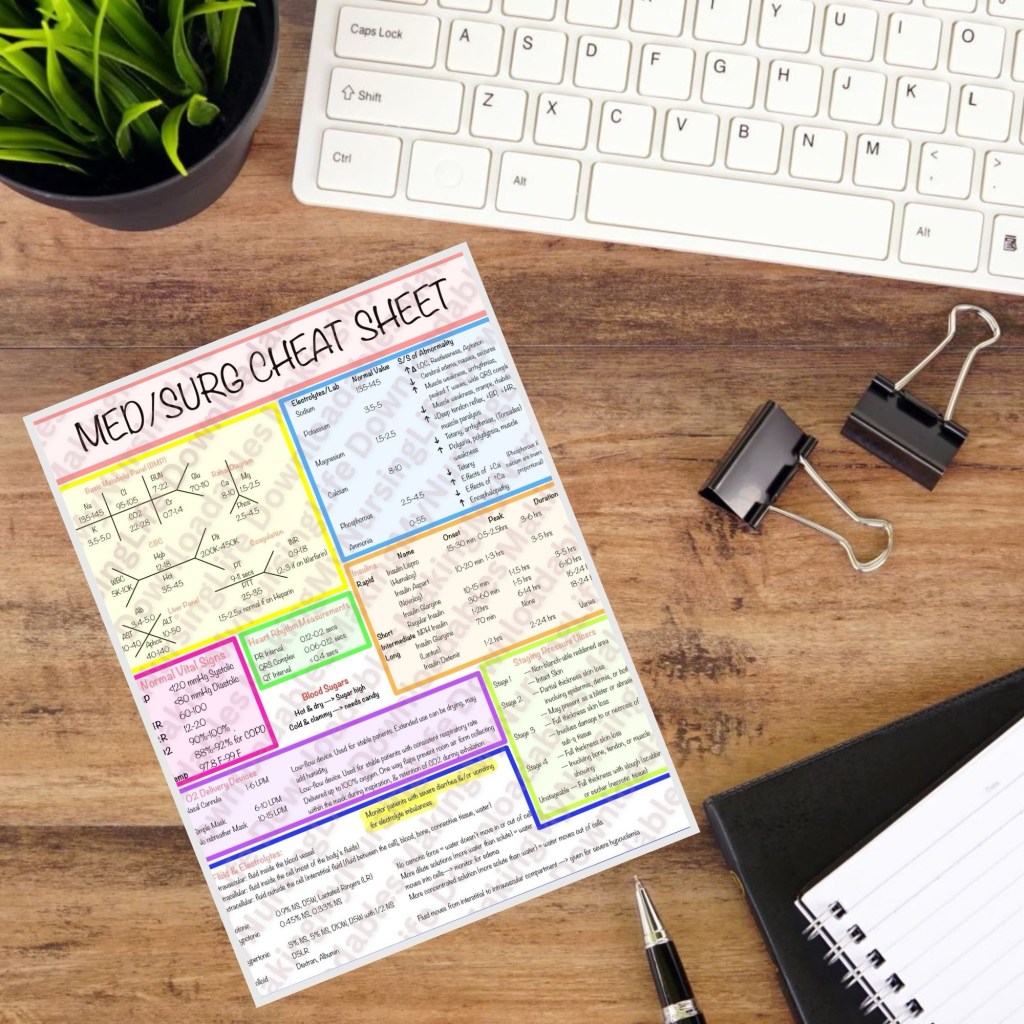
In this post, I’ll walk you through how I use note-taking as a living, evolving resource—typing and handwriting notes, updating them with class material, and then color coding them to use again later for clinicals. I’ll also show you how to integrate the cheat sheets into this strategy so you get the most out of them. These sheets are completely free, but if they help you, please consider donating to support my small business. And if you like what you see, subscribe—a free Pediatric or CPR cheat sheet is coming soon!
✍️ Step 1: Write or Type Out Your Notes Before Class
Here’s where most students fall behind: they wait until after class to take notes seriously. But if you show up to class with your basic notes already typed or written out, you’re playing chess while everyone else is playing checkers.
Here’s what I recommend:
Use your textbook, syllabus, or instructor’s outline to create a basic structure for your notes ahead of class. Keep each section spacious—leave space to write in more details during class. Print out your Med/Surg or Maternal Newborn cheat sheet (links below) and tape them into your notebook or slide them into the front of your binder.
By showing up to class with a “prepped” notebook, you’re not scrambling to write everything down. You’re listening, highlighting, and adding to a framework.
Example:
Let’s say you’re covering respiratory conditions in Med/Surg. The cheat sheet already includes key terms like “ABGs,” “Pneumonia,” or “COPD management.” Type those in ahead of time. Then during class, you just add your professor’s extra details—like specific medications, patho notes, or test question hints.
🎯 Step 2: Add Instructor Gold Nuggets During Class
The most valuable information in nursing school often isn’t in your textbook—it’s what your instructors emphasize. When you’re not scrambling to write every slide word-for-word, you can focus on these golden nuggets.
What to listen for:
“This is something NCLEX loves to ask.” “You’ll need to know this for clinical.” “Don’t memorize this—understand it.” Anything your professor repeats, says slowly, or emphasizes in tone.
Action Tip:
Use symbols to mark these moments:
⭐ = NCLEX tip 💉 = Clinical relevance ❗ = High-priority concept 🧠 = Memorization required
Adding symbols next to points in your pre-written notes makes review later so much faster.
🧠 Step 3: Color Code Your Notes for Clinical and Study Power
Color coding isn’t just about aesthetics—it’s about wiring your brain to find info faster. If you walk into clinical with a binder of organized, color-coded notes, it’ll save you time, reduce anxiety, and make you look more competent.
Sample Color Code System:
Blue = Assessment/Vitals Red = Interventions Green = Medications Yellow = Lab values Pink = Nursing priorities or critical thinking tips
When you use the same color system every time, your brain begins to associate colors with certain content types. Later, when you’re taking the NCLEX or doing patient charting, you’ll recall information faster.
Bonus: Use highlighters, sticky tabs, or even colored page borders to group your cheat sheets and notes by system (e.g., one tab for Med/Surg, one for Maternal Newborn, etc.).
📚 Step 4: Use the Cheat Sheets as Active Study Tools
The free Med/Surg and Maternal Newborn cheat sheets are more than just quick references. Use them as anchors for spaced repetition and active recall.
Med/Surg Cheat Sheet:
This includes system-by-system breakdowns that are perfect for quick refreshers:
Respiratory interventions (e.g., oxygen delivery systems) Cardiac assessment and priority labs Neuro checks and stroke signs Renal, endocrine, GI tips
Use Case:
Before a Med/Surg exam, sit down with your color-coded notes and match them to the cheat sheet. What’s missing? What’s unclear? Fill those gaps.
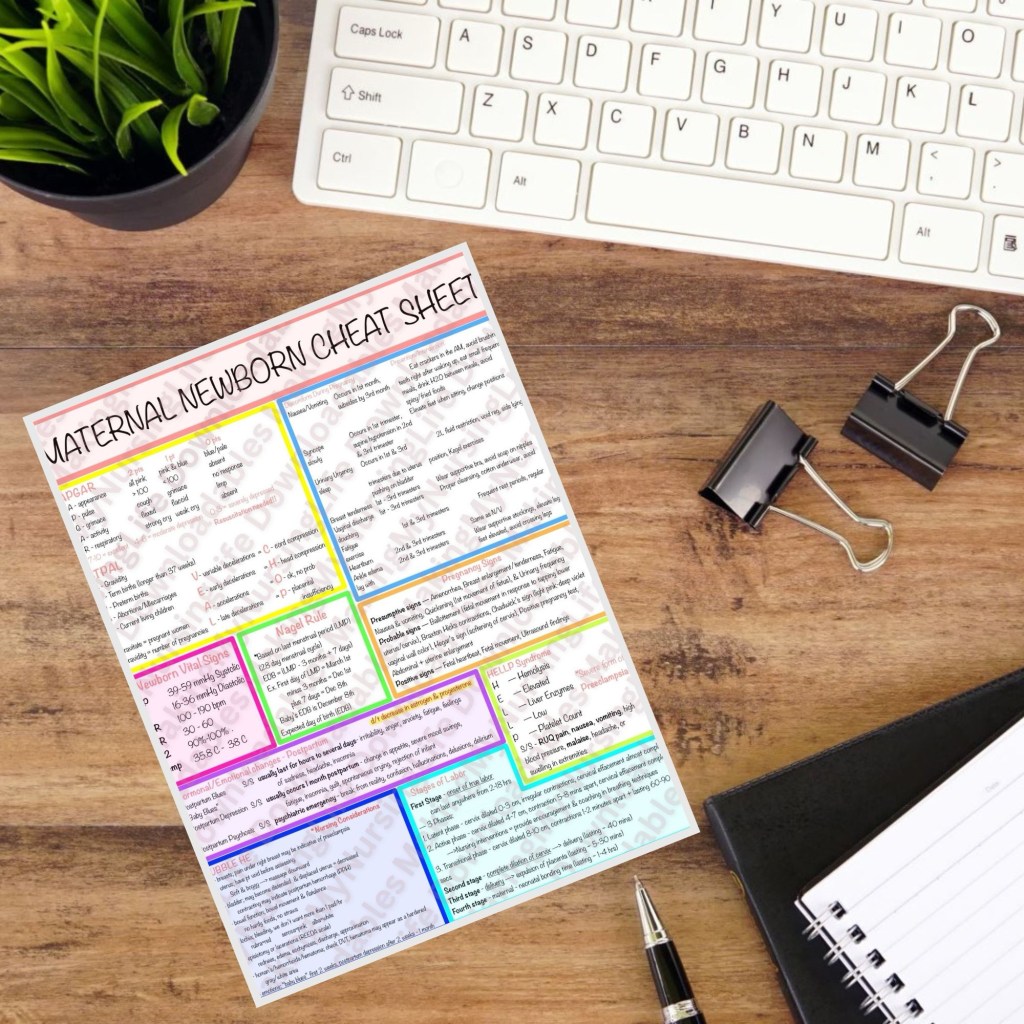
Maternal Newborn Cheat Sheet:
It covers all the big-ticket items:
APGAR scoring Pregnancy signs (presumptive, probable, positive) Stages of labor Postpartum red flags HELLP syndrome BUBBLE HE postpartum assessment
Use Case:
Going into OB clinicals? Slip this cheat sheet into your scrub pocket or clinical clipboard. It’s small enough to carry and packed with details you’ll need when you’re on your feet with a patient.
🔁 Step 5: Revise + Re-Review (Spaced Repetition Style)
Once you’ve added class insights and color-coded your notes, revisit them regularly:
Day of class: review once at night 3 days later: active recall session (cover answers, quiz yourself) 1 week later: do a quick flip-through with the cheat sheet Before the test: reprint clean versions of the cheat sheets with any updated notes added on the back
This method isn’t cramming. It’s structured, brain-based learning—and it sticks.
🛠️ Real-Life Use: Clinicals
Let’s talk clinicals. They’re chaotic, fast-paced, and unpredictable. But your cheat sheets and color-coded notes can be your secret weapon.
Here’s how:
Bring a mini clipboard with pre-printed sheets sorted by system (Maternal Newborn, Med/Surg, eventually Peds and CPR). Add sticky tabs to each sheet for fast flipping. Review patient-specific info in the car before walking in. After each patient interaction, take 30 seconds to jot down anything new you learned—then add it to your master notes later that night.
This process helps turn real-world moments into lasting knowledge.
🖨️ Download Your FREE Cheat Sheets
✅ Med/Surg Cheat Sheet [Free PDF]
Includes: systems-based breakdowns, nursing priorities, ABG ranges, quick cardiac & respiratory interventions.
✅ Maternal Newborn Cheat Sheet [Free PDF]
Includes: APGAR scoring, pregnancy signs, labor stages, postpartum assessments (BUBBLE HE), HELLP syndrome, vital signs, and more.
❤️ Like These Resources? Support This Project
These cheat sheets are 100% free because I believe every nursing student deserves tools that actually help. But if they’ve helped you, please consider:
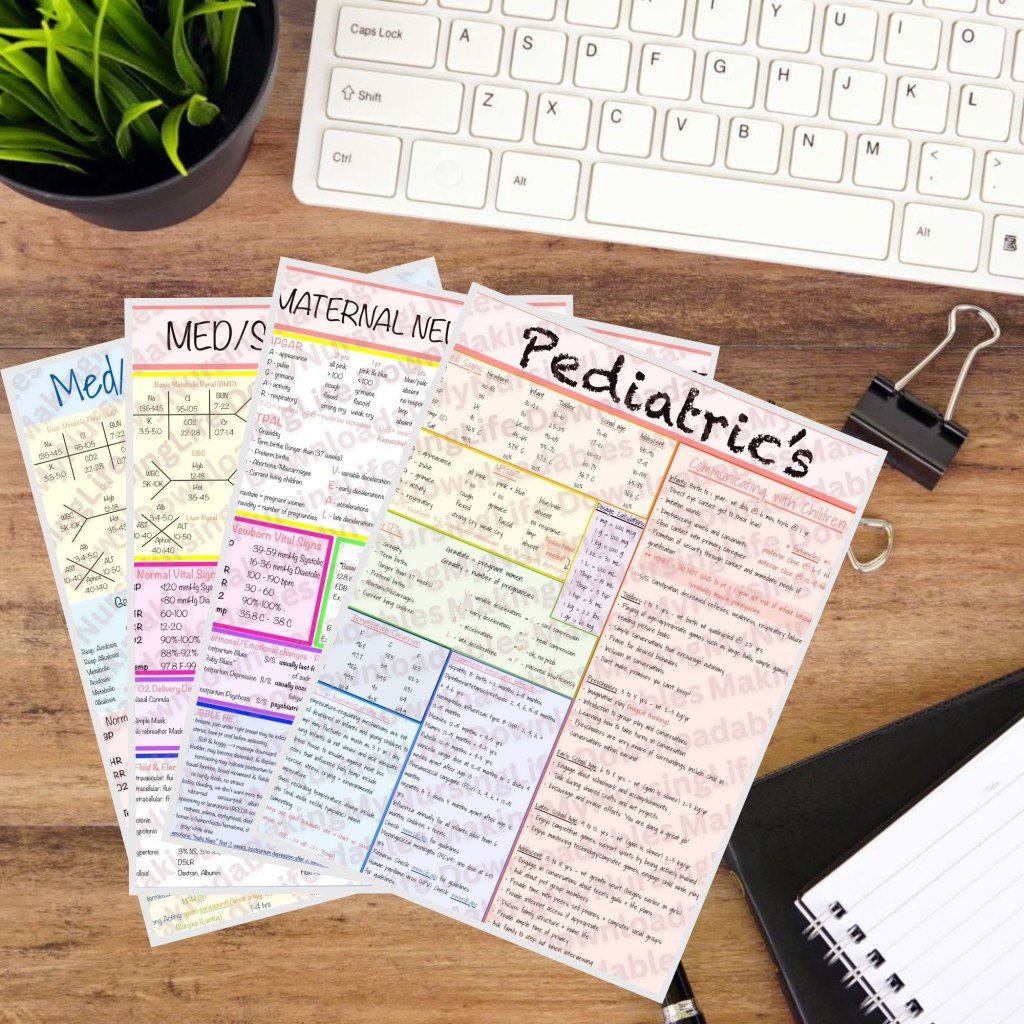
Donating — Even a few dollars helps me keep this resource going and expand into new sheets for Pediatrics, CPR, and beyond. Sharing — Tag a classmate or send the link in your group chat. Subscribing — Be the first to know when new free sheets drop (including Pediatric and CPR coming soon!)
Every bit of support helps this grow. I’m a nursing student too. I get it. And I built this because I needed it—so if it helps you too, that means everything.
🎉 What’s Coming Next?
I’m working on two new cheat sheets right now:
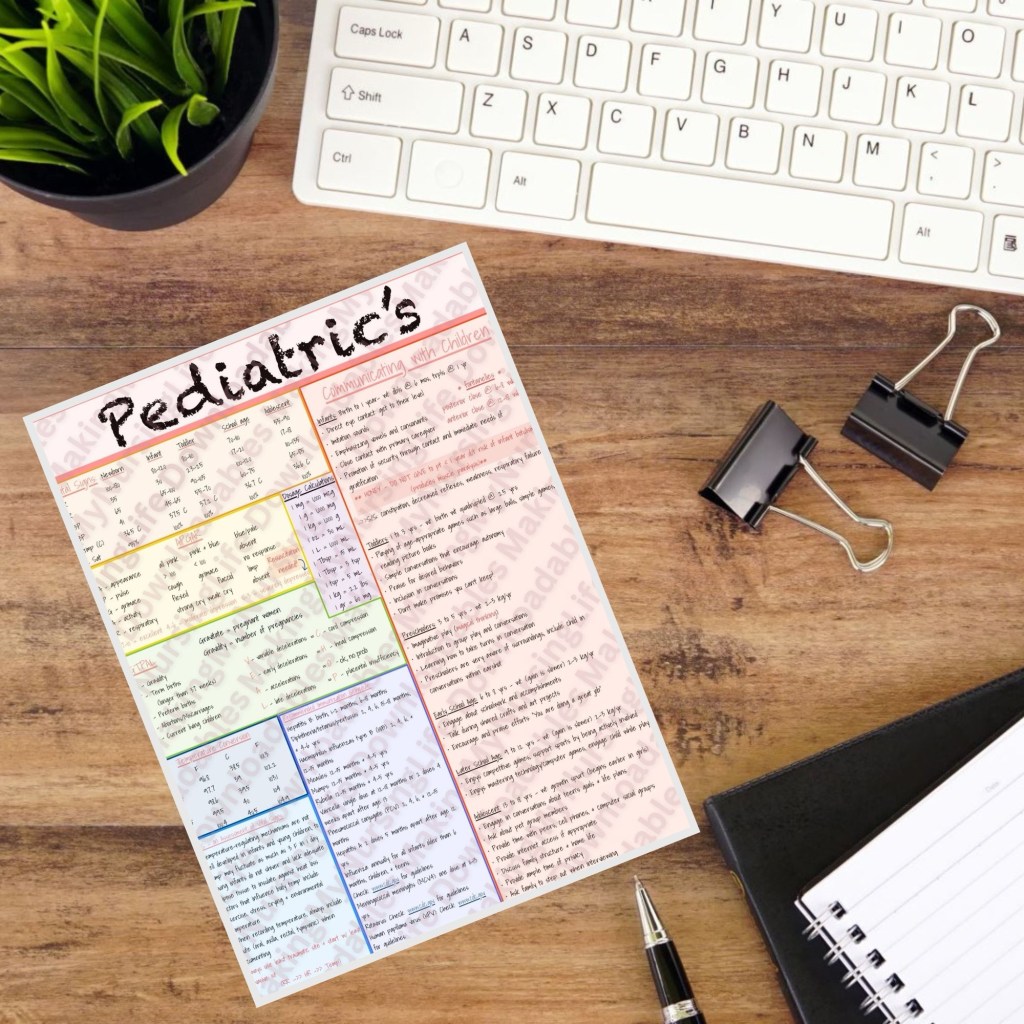
Pediatrics — Growth milestones, med safety, VS norms by age CPR & Emergency Basics — BLS vs ACLS steps, rhythms, crash cart essentials
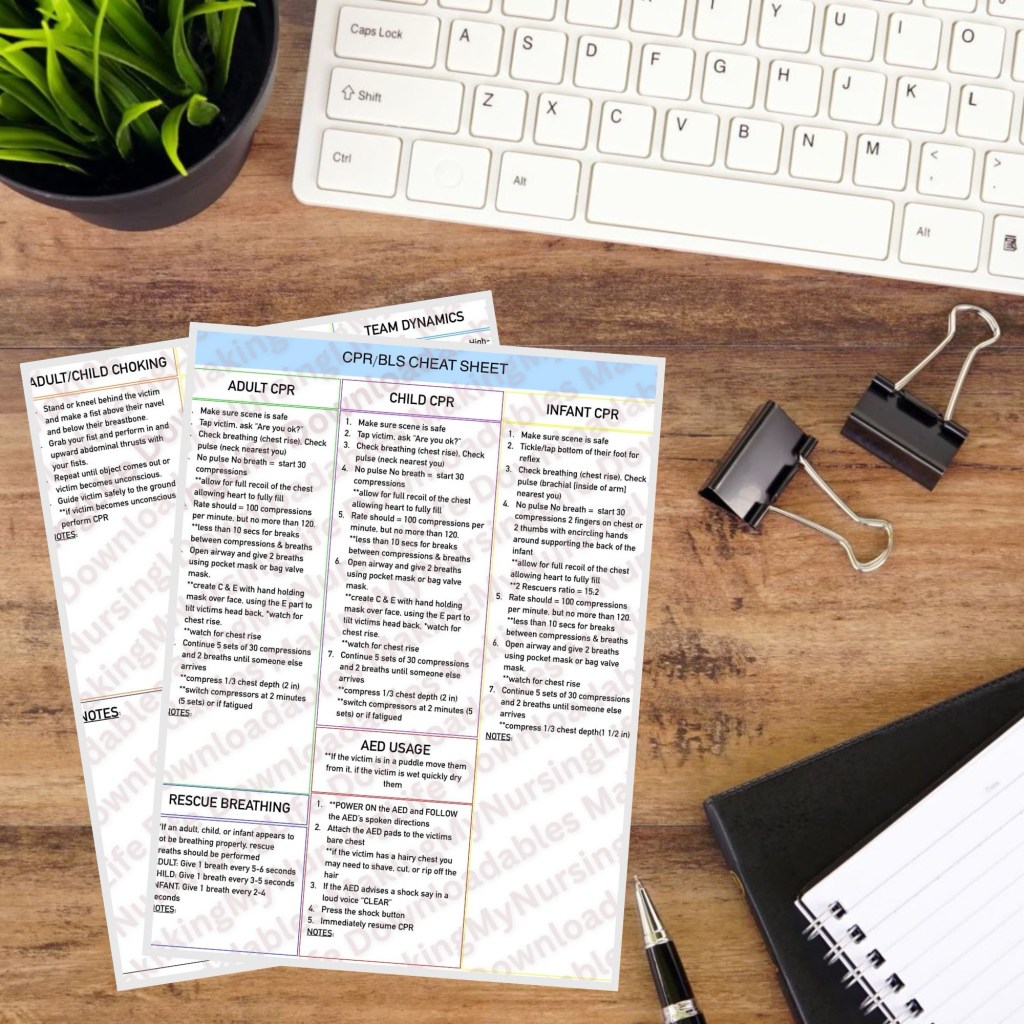
Want them free when they drop? Subscribe here and I’ll send them your way the minute they’re done.
🧾 The Nursing Study Strategy that Works
Pre-write notes using textbook/syllabus Add in class details in real time Color code everything for faster recall & better clinical use Use cheat sheets as anchor points Review regularly using spaced repetition Update with real-world learning from clinicals
—
Nursing school doesn’t have to be a grind. With a smart system and the right tools, you can turn chaos into confidence. So download the free cheat sheets, give these strategies a try, and let’s crush this together.
🩺 Stay sharp, stay sane, and keep going—you’ve got this.
 In Need of Nature
Leave a comment