

1. Always the Helper, Never the Helped
I’ve always been the one who shows up.
The one who says, “Yes, of course,” when someone needs help moving, talking, venting, or simply feeling less alone.
Helping others isn’t just something I do—it’s my default setting. It’s where I feel useful, needed, and valuable.
But here’s the uncomfortable truth: when you’re wired to help others, it’s ridiculously easy to forget to help yourself.
My calendar fills with everyone else’s needs, while mine get penciled in for “someday.” And “someday” rarely comes. I would tell myself, I’ll rest after this project, or I’ll make time for me once things calm down. But life never really calms down—it just shifts the chaos into new shapes.
And slowly, without noticing, I became the person who could pour into everyone else’s cup while mine sat empty.
2. Finding a Tiny Oasis in a Pot
A few years ago, I bought my first succulent.
No deep reason—just something small and green I thought might brighten my desk.
It didn’t demand much. It didn’t cry for water. It didn’t need me to rearrange my schedule for it. It simply sat there, quietly existing.
And yet, caring for it became… soothing. It was a tiny act of nurturing that didn’t drain me. Instead, it gave me something back.
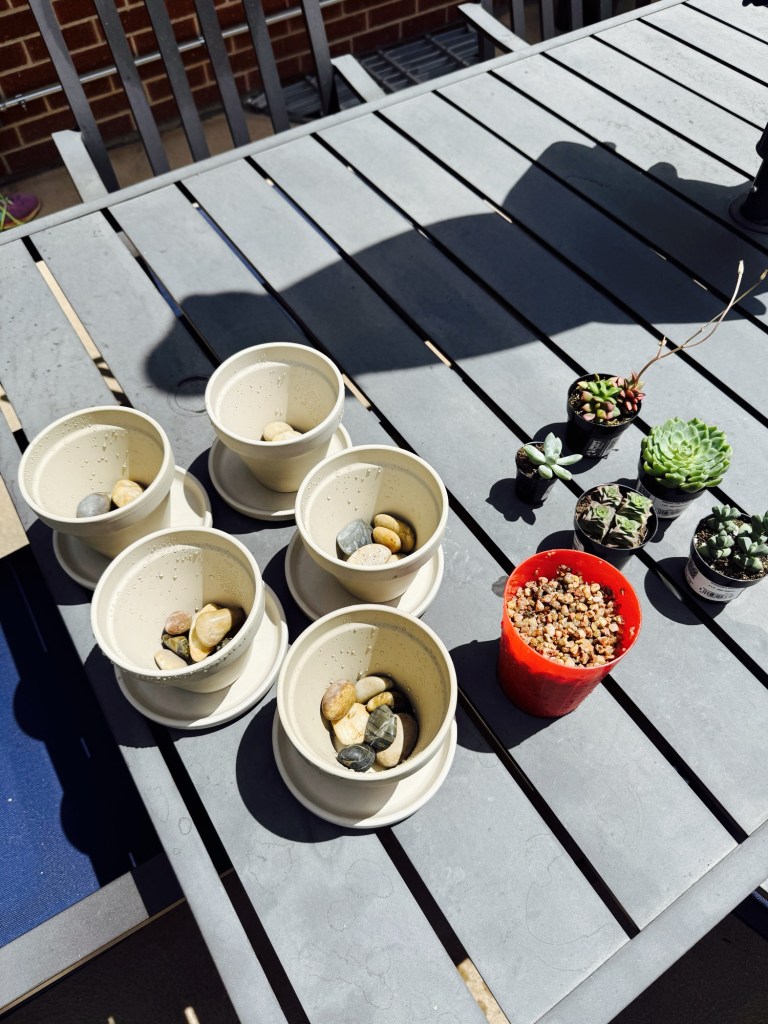
One succulent became two, then three, then a little row of mismatched pots along my windowsill. I wasn’t consciously trying to start a collection—it just happened, one impulse buy at a time.
The thing is, these plants didn’t just survive on my care; they seemed to mirror it back to me. Every time I took a few minutes to water them, to check their leaves, or to move them toward the sun, I was also telling myself: Hey, you matter too.
3. The Learning Curve: It’s Not Just Water and Sunlight
When I first started, I made all the classic mistakes:
Overwatering because I thought more love = more growth. Underwatering when I got busy and forgot about them. Placing them in the wrong light because I thought, Sun is sun, right?
Turns out, succulents are surprisingly particular. They thrive when you respect their natural rhythms—not when you smother them with care or leave them to fend for themselves.
I learned to check the soil instead of the calendar. I learned that patience matters—that growth isn’t always visible, but it’s still happening.
Some plants taught me this lesson the hard way. A few leaves shriveled. A few rotted from too much water. It was frustrating, but it was also oddly comforting—mistakes didn’t mean failure. It just meant learning.
4. The Irony: Succulents as Parenting Metaphors
Somewhere along the way, it hit me:
Succulent care is eerily similar to how I think about parenting.
I’m not a parent yet, but I’ve had enough conversations, observations, and late-night thoughts to know that raising children is its own delicate balance.
Smothering them—like overwatering—can stunt growth.
Neglecting them—like underwatering—can cause them to wither.
The magic is in giving them the tools, the environment, and the freedom to grow into their best selves. Not molding them into what we think they should be, but supporting what they’re meant to be.
It’s ironic—succulents don’t have emotions, dreams, or personalities the way children do, but the principles are strangely similar. In both cases, love isn’t about constant control; it’s about trust.

5. Life Lessons My Succulents Keep Teaching Me
The more I care for them, the more I realize these lessons apply far beyond my windowsill:
Not everything thrives under the same conditions. What works for one person—or plant—might overwhelm another. The goal isn’t to treat everyone the same but to understand what each needs to thrive. Growth takes time, and sometimes it’s invisible. Just because you can’t see progress doesn’t mean nothing’s happening. Roots grow before blooms appear. Healing happens before confidence shows. You can’t pour from an empty watering can. My succulents remind me that I need to refill my own well before giving to others. Caregivers burn out when they never pause to receive. Boundaries are a form of care. Sunlight, shade, water, and rest—plants and people both need balance to flourish. Too much of anything, even good things, can be harmful. Letting go of control is part of the process. I can guide, but I can’t force. And that’s okay. The best growth often happens when we step back.
6. Making Space for Myself Without the Guilt
Here’s the hard part:
When you’re used to pouring into others, making time for yourself feels selfish—even when you know it’s necessary.
But I’m slowly shifting that mindset.
Caring for my succulents is my daily reminder that my needs matter. That I can take five minutes to tend to something that makes me happy without feeling like I’ve taken from someone else.
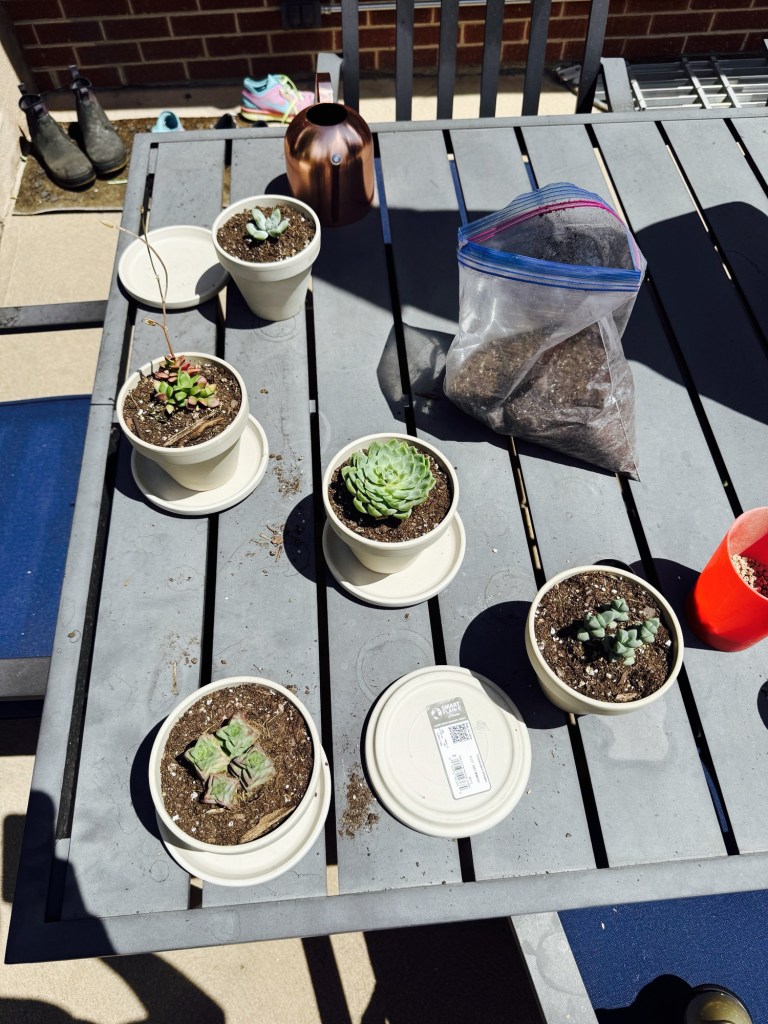
I’ve learned that self-care doesn’t always look like spa days or vacations. Sometimes it’s watering a plant before the soil dries too much. Sometimes it’s repotting one that’s outgrown its home.
It’s a pause in the middle of the chaos. It’s breathing room. And maybe most importantly, it’s proof that small acts of self-care can ripple into everything else I do.
7. Finding Your Own “Succulent”
Maybe for you it’s knitting, or painting, or baking bread.
Maybe it’s tending a garden, journaling, or walking your dog without your phone in your hand.
The point isn’t the plant.
The point is finding something that fills you up instead of drains you—something you do simply because it makes you feel more you.
Because when we remember to care for ourselves, we show up for others with more patience, more energy, and more joy.
My succulents might not know it, but they’ve taught me something I desperately needed to learn:
You don’t have to save the whole forest. Sometimes, it’s enough to water one plant well.
 In Need of Nature
Leave a comment