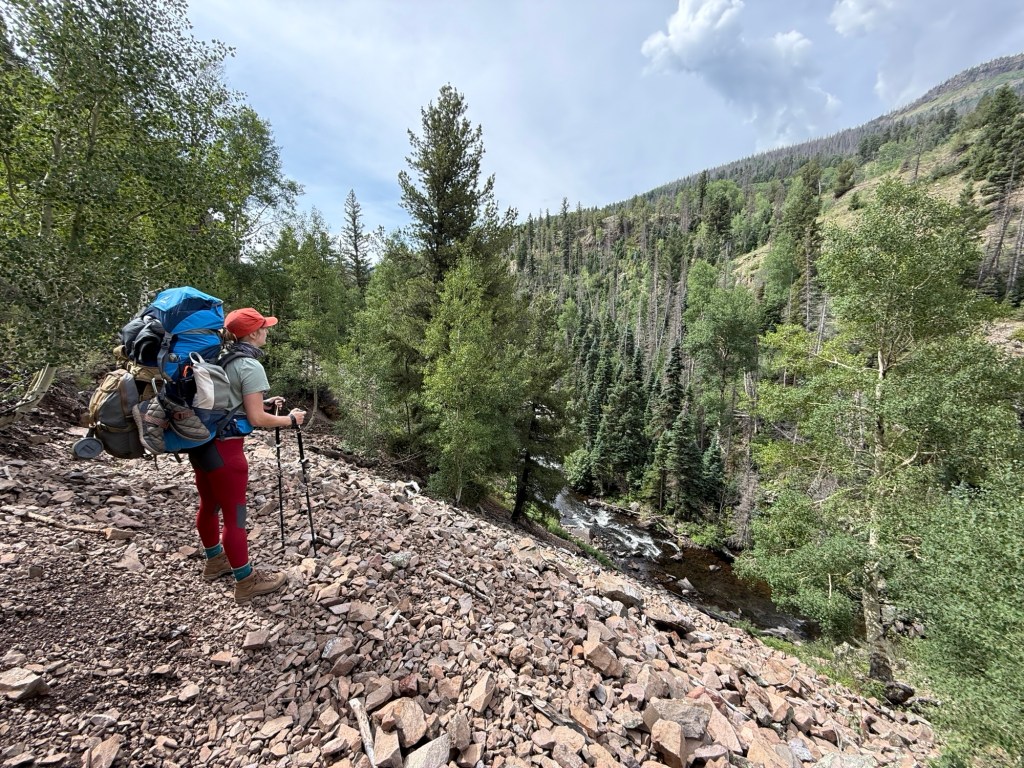

For months, Jacob had been researching, planning, and preparing for what would be my very first true backpacking trip—five days and four nights in the wilderness, carrying everything we needed on our backs.
We’ve gone hiking, camping, and even snowshoeing together before. I’ve hiked a few miles in, set up a day camp to fish, eat, and take photos, then hiked back out the same day. But I had never actually lived out of my pack for nearly a week. That meant food, shelter, gear, and clothes all coming with me, step by step.
Jacob knew I could hike 6–7 miles without much trouble. But add a heavy pack, rougher terrain, and longer days—and suddenly, that distance feels different. He made sure to keep our trek to about 7 miles a day at most. He even checked trail reports and photos that made it look “pretty flat with a gradual incline.”
Spoiler: it was not flat.
Packing Up: Lessons Learned Before the First Step
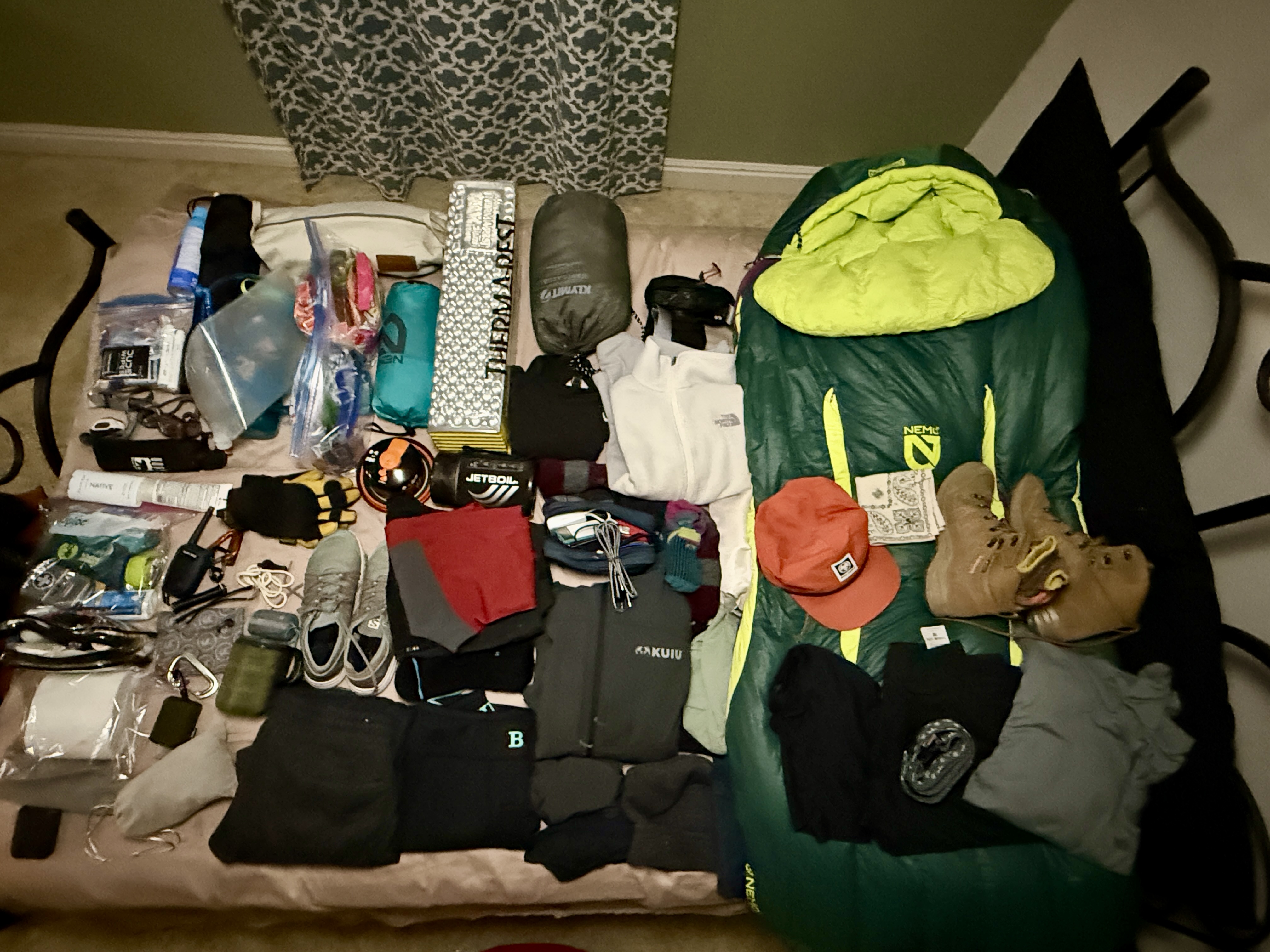

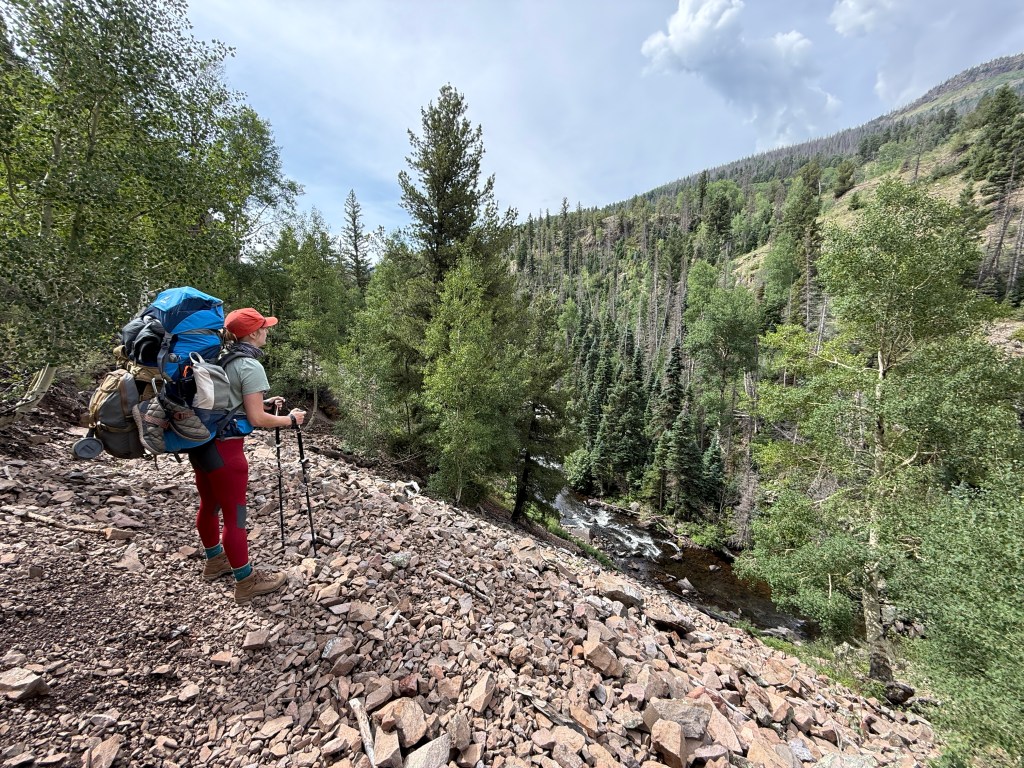
When we spread out all our gear before the trip, I felt prepared. I had about 50 pounds on my back—including food for the next 5 days, clothing layers, my share of camp supplies, and the personal essentials I thought I’d need. It looked organized, but the reality of carrying it was a whole different test.
There are a few things I’d definitely pack differently next time. Some items were lifesavers, others never left the bag. But as a first-timer, I learned quickly that “packing smart” doesn’t always mean “packing light.”
The Trek Begins
From the very first mile, we realized that the trail description we’d read was overly optimistic. Yes, there were flat stretches. But there were also ten steep inclines, narrow passages, and rocky climbs. We even crossed through areas that had been carved out by past rock slides and mudslides.
I was so glad we brought trekking poles.
Without the 50 pounds strapped to me, I might have called this a “medium hike”—challenging but not impossible. But with the pack, it became a grind.
I’ve started measuring hikes by what kind of shoes they demand:
- Easy = Chacos.
- Medium = tennis shoes or light hiking shoes.
- Difficult = hiking boots.
- Extreme = hiking boots + crampons + trekking poles.
This one? Solidly in the difficult category with heavy packs.
After 6 hours of steady movement, I hit my wall around 4 miles in. My body was done, my energy gone. So we set up camp for the night before making the push to our intended spot the next day.
Reaching the Meadow
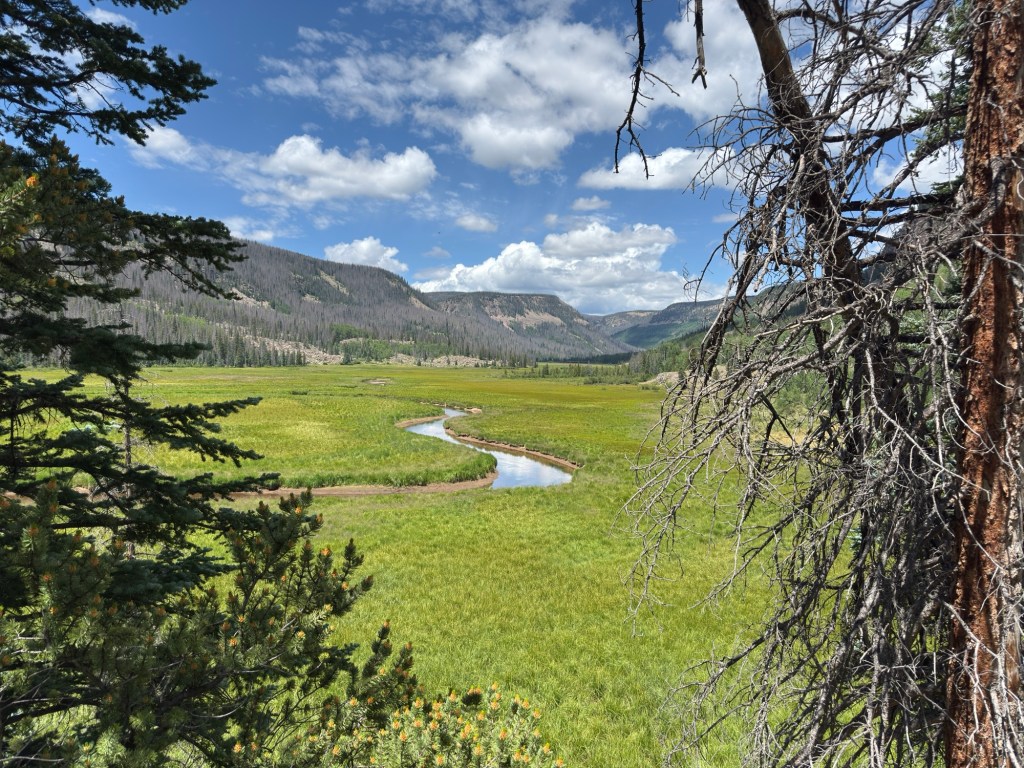
The next morning, we had about 2 miles left to reach the meadow we were aiming for. And wow—when we finally arrived, it was worth it.
Everything around us opened up into a wide valley with tree-lined ridges and open skies. It felt like stepping into another world—untouched, raw, and absolutely breathtaking.
But beauty doesn’t erase exhaustion. By the time we set up camp, I was completely drained. Every muscle throbbed, every joint ached. Still, sitting there with Jacob, watching the landscape shift colors as the sun dropped, I couldn’t help but feel proud.
Weathering the Storms
Backcountry weather has a mind of its own. For most of the days we camped, rain was a constant companion—sometimes light, sometimes heavy, and occasionally punctuated with thunder and lightning.
That meant lots of tent time. Meals were cozy but cramped. We’d peek outside, test the air, and then another storm would roll through.
One day I tried to join Jacob and his brother for fishing. I lasted through dodging three separate storms before I called it quits. By then, my clothes were damp and the chill was creeping in. The last thing I wanted was to be stuck cold and wet in the backcountry, where warming up isn’t as simple as grabbing a blanket off the couch.
So I headed back to camp, grateful for dry layers and a sleeping bag that held in the warmth.
The Trek Out
Heading down should feel easier—you’re lighter (since you’ve eaten through food weight) and gravity is technically on your side. But downhills come with their own challenges.
We still had rocky terrain, muddy trails, and narrow paths to navigate. And then, halfway down, the sky opened up.
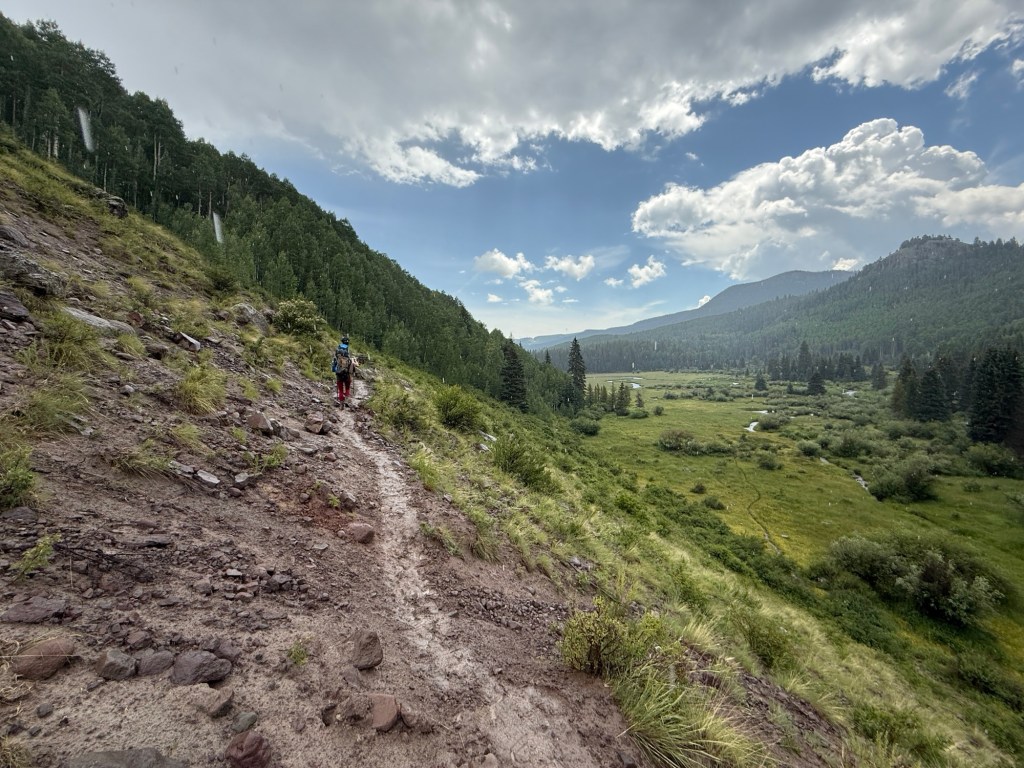
First rain. Then a downpour. Then graupel—tiny ice pellets stinging our faces as we trudged forward.
We kept moving, step by step, soaked but determined. Breaks were absolutely necessary just to catch our breath and reset. It wasn’t glamorous, but it was gritty and real.
My Backpacking Gear: What Worked, What I’d Change
One of the biggest parts of a first-time backpacking trip is figuring out gear balance—what’s essential, what’s nice-to-have, and what’s dead weight. Here’s a breakdown of what I carried, what saved me, and what I’d change next time.
🏕️ Backpacking Gear List (with My Picks)
These are the items I packed (or wish I had!) on my first 5-day backpacking trip. Each one earned its place in the backcountry. I’ve linked versions I recommend through my Amazon Associates account — if you buy through these links, I may earn a small commission at no extra cost to you. It helps support our small business and future adventures, so thank you!
Shelter & Sleep
- Lightweight Tent (2-person) → Check on Amazon
Sharing tent weight with Jacob made all the difference. A sturdy, lightweight option is worth the space in your pack. - Sleeping Bag (20°F or lower) → Check on Amazon
Rain, storms, and damp air didn’t matter — my bag kept me warm and dry every night. If you splurge on one thing, make it this. - Sleeping Pad (Therm-a-Rest style) → Check on Amazon
Don’t underestimate comfort. A pad adds insulation and saves your back after miles of rocky trail.
Cooking & Food
- Jetboil Backpacking Stove → Check on Amazon
Fast, reliable, and a lifesaver when you want hot food in the rain. I’ll never go without it. - Fuel Canisters (isobutane/propane mix) → Check on Amazon
Lightweight, efficient, and easy to stash. Just make sure you bring enough for the full trip. - Lightweight Cookware Set → Check on Amazon
One pot, one utensil, that’s all you need. Keep it simple. - Bear Bag / Food Storage Sack → Check on Amazon
This is not marketed as a bear bag however we used it as one, making sure it was high enough away from bears. - Collapsible Water Bottle / Hydration Bladder → Check on Amazon
Easy to refill on the trail and packs down when empty. - Water Filter (Sawyer Mini or similar) → Check on Amazon
Fresh water without carrying gallons. A non-negotiable for any backcountry trip.
Clothing
- Rain Jacket + Pants → Check on Amazon
It rained almost every day — without these, I would’ve been miserable. - Moisture-Wicking Base Layers → Check on Amazon
Dry fast, pack light, and keep you comfortable through changing weather. - Fleece Midlayer → Check on Amazon
Perfect balance of warmth without bulk. I used mine daily. - Wool Hiking Socks → Check on Amazon
The real MVP. Nothing boosts morale like a dry, clean pair of socks.
Footwear
- Waterproof Hiking Boots → Check on Amazon
The rocky, muddy terrain made boots essential. My ankles were grateful. - Camp Shoes (lightweight sneakers or Crocs) → Check on Amazon
Optional, but slipping into these at camp felt like heaven after a long day in boots.
Navigation & Safety
- Headlamp with Extra Batteries → Check on Amazon
Used every single night. Don’t depend on your phone flashlight. - First Aid Kit (with blister care) → Check on Amazon
I only needed it for small things, but knowing it was there made me feel prepared. - Garmin GPS Communicator → Check on Amazon
Both Jacob and I carried Garmins so we could message each other and share our locations if we ever got separated. That peace of mind was priceless, especially in the backcountry where cell service doesn’t exist.
Comfort & Extras
- Trekking Poles → Check on Amazon
Honestly, I don’t know if I could’ve done this trip without them. Lifesavers on steep inclines and descents. - Helinox Chair (lightweight luxury) → Check on Amazon
Not essential, but when you’re out there for five days, this little luxury makes camp so much more enjoyable. - Bandana or Buff → Check on Amazon
Multi-use, light, and versatile. Sweat rag, towel, sun protection — it did it all. - Power Bank (solar optional) → Check on Amazon
Kept my phone alive for photos, maps, and emergencies. Worth the ounces. And the multi-cord to charge everything.
🙏 Thank You
Every time you shop through these links, you’re supporting more than just future gear hauls — you’re helping us keep sharing stories, tips, and lessons from the trail. We’re so grateful for every bit of support for our small business. 💚
For additional guidance on gear click herehttps://summitandstream.com/category/gear/
What I Learned
This trip taught me more about myself than I expected. Here are my biggest takeaways:
- Backpacking is not the same as hiking.
Even if you’ve crushed day hikes, the weight of your pack changes everything. Training hikes with weight beforehand are a must. - Gear matters.
Trekking poles saved me. A solid sleeping bag kept me dry and warm. Boots were non-negotiable. - Weather rules all.
You can plan for clear skies, but storms will come. Packing layers, rain gear, and a positive attitude is crucial. - Listen to your body.
I hit my max at 4 miles. Stopping early made the rest of the trip possible. Pushing past that point might have ruined it entirely. - The reward is worth it.
The exhaustion, the rain, the discomfort—all of it faded when I looked out at that meadow. That view, that sense of accomplishment, was priceless.
Final Thoughts
I couldn’t be more proud of myself for completing this backpacking adventure. It wasn’t easy, it wasn’t “flat,” and it definitely wasn’t what I imagined from the trail reports. But it was unforgettable.
Backpacking pushes you in ways that car camping or day hikes simply don’t. It strips everything down to the basics—what you can carry, what you can endure, and how you choose to react when things don’t go according to plan.
Would I do it again? Absolutely. With a lighter pack, smarter packing choices, and the knowledge I’ve gained, I know the next trip will be even better.
And if you’re thinking about your first backpacking trip—know this: it’s going to be harder than you expect, but you’ll walk away stronger, prouder, and with memories that will stick forever.
Resources
I’ve included a downloadable packing list to help you prepare:
- My personal list (what worked, what I’d change)
- Beginner’s checklist (for first-timers that REI provides for free)
- Advanced list (for longer or tougher treks)
Whether you’re planning a quick overnight or a week-long adventure, these lists can help you avoid rookie mistakes and focus on what really matters: enjoying the journey.
💡 Your Turn: Have you ever gone on a backpacking trip? What was your biggest lesson learned? Drop a comment below—I’d love to hear your stories.
 In Need of Nature
Leave a comment