
Let’s start with a confession.
I thought I was doing a pretty good job cleaning my Breville Barista Express.
I wiped it down.
I emptied the drip tray.
I descaled it… occasionally… when the light yelled at me.
What I did not do was change the water filter at the one-month mark.
Or the second month.
Or the third.
Turns out, the “replace every month” suggestion wasn’t just a cute idea. It was, in fact, very real, very important, and very responsible—three things I apparently was not when it came to espresso machine ownership.
If you’re reading this thinking, “Wait… there’s a filter in there?”
Hi. Welcome. Sit down. You’re safe here.
This blog post is for anyone who:
- Loves coffee but is still learning
- Assumed “clean enough” was good enough
- Has ever blamed their beans when the machine was clearly the problem
- Wants their espresso to taste incredible without turning maintenance into a full-time job
Let’s talk about why cleaning your Barista Express matters, what happens when you don’t (no judgment, just science), and the cleaning checklist I now live by to keep my coffee tasting as good as it possibly can.
Why Cleaning Your Barista Express Actually Matters (More Than You Think)
Espresso machines are like relationships.
If you don’t maintain them, things get weird, bitter, and unpredictable.
Your Barista Express deals with:
- Hot water
- Pressure
- Coffee oils
- Milk residue
- Minerals from your water
- Grounds that love to hide in tiny crevices
Over time, all of that buildup affects:
- Flavor (hello bitterness)
- Water flow
- Pressure
- Temperature stability
- Longevity of the machine
Translation: dirty machine = sad espresso.
And while Breville is very kind about reminding you when it’s time to descale, it does not remind you that your filter is quietly aging like milk left in the sun.
Ask me how I know.
The Filter Incident (AKA: How I Learned I Was the Problem)
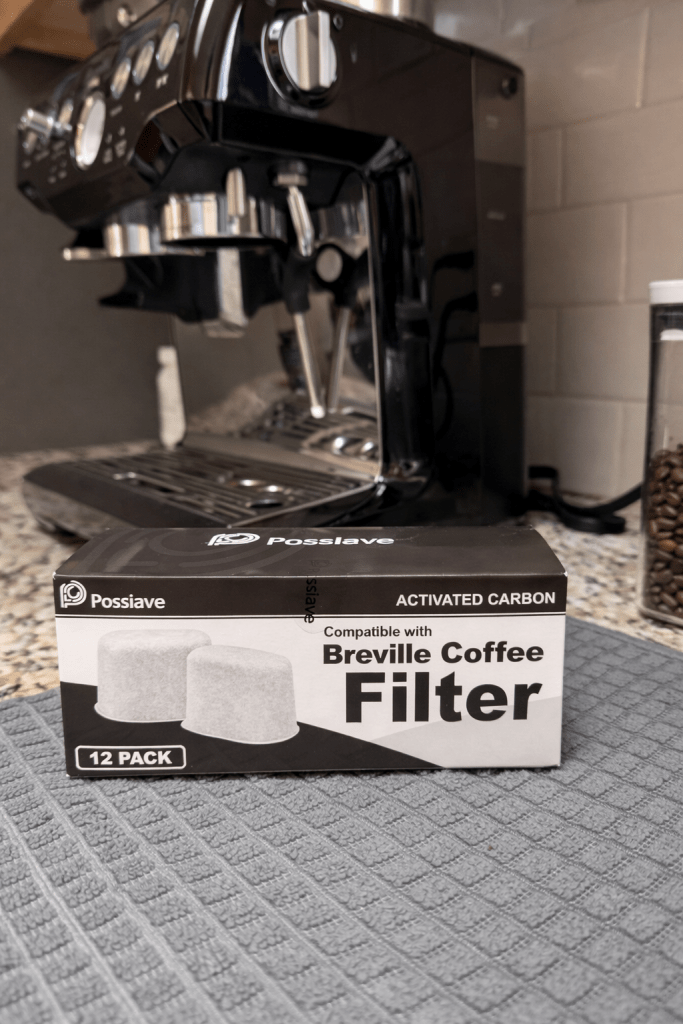
I learned about the monthly filter replacement… after three months.
THREE.
MONTHS.
I had noticed my coffee tasting “off,” but like any reasonable person, I blamed:
- The beans
- My grind size
- My tamp
- The humidity
- Mercury in retrograde
Anything except the fact that my filter was probably working overtime and filing a complaint with HR.
Once I replaced it?
Night and day.
Cleaner taste.
Less bitterness.
More clarity.
Turns out, the filter’s job is to reduce minerals and impurities in your water—impurities that absolutely affect flavor and can speed up scale buildup.
So yes, change the filter once a month.
Not “when you remember.”
Not “when it looks sad.”
Monthly. Period.
Learn from my mistakes.
Descaling: When the Machine Is Begging for Help
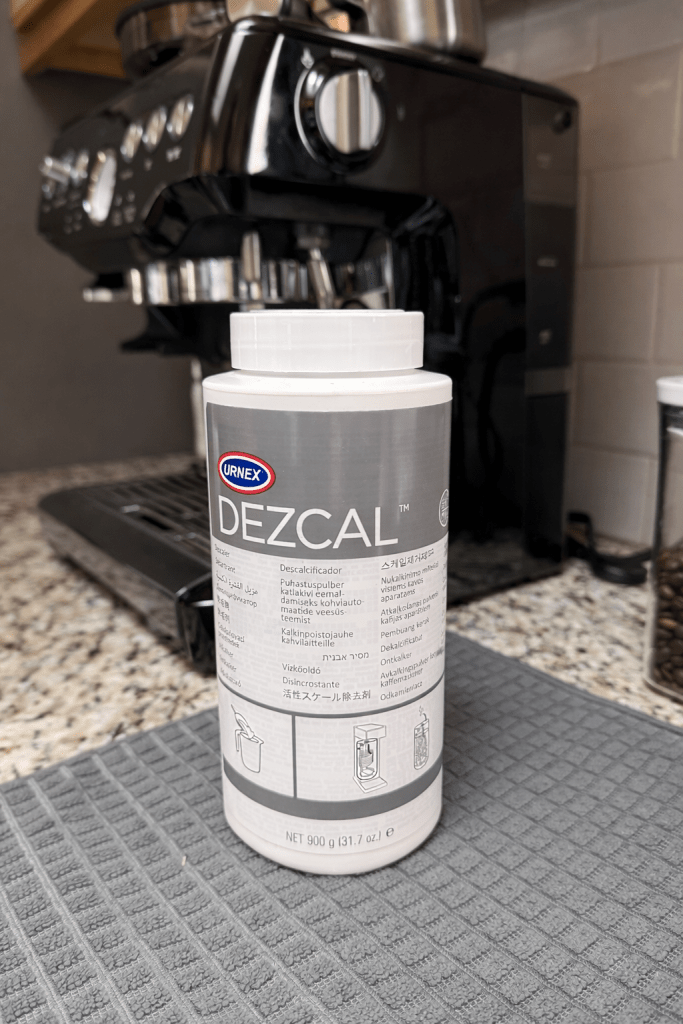
Descaling removes mineral buildup from the internal water lines—stuff you cannot see but your taste buds definitely can.
Here’s when you should descale:
- When the descale light is flashing
- OR when your coffee suddenly tastes off
- OR when it’s been a while and you’re thinking, “I should probably do that”
If your espresso tastes:
- Flat
- Dull
- Bitter for no reason
- Inconsistent from shot to shot
It’s probably time.
Descaling feels intimidating until you do it once. Then you realize:
- The machine literally walks you through it
- You mostly just stand there refilling water
- It’s annoying, not difficult
Pro tip:
Do it on a day you’re already home and slightly productive. Pair it with laundry. Or avoidance cleaning.
Cleaning Tablets: The Unsung Heroes of Espresso Maintenance
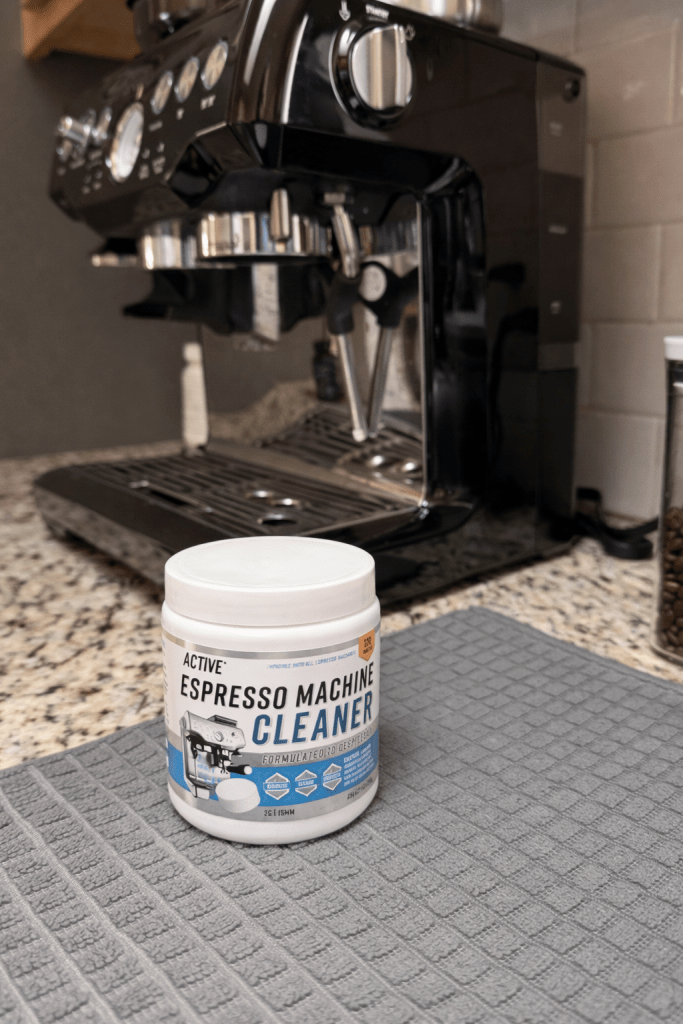
Let’s talk about cleaning tablets.
These little guys go into the portafilter and clean the group head—the part where hot water and coffee oils meet and slowly create chaos.
Coffee oils are sneaky. They build up and turn rancid over time, which absolutely affects flavor.
Using cleaning tablets:
- Removes old coffee oils
- Keeps water flow even
- Helps your machine pull consistent shots
You run a clean cycle, the machine does its thing, and suddenly your espresso tastes… brighter. Cleaner. More intentional.
I now run a cleaning cycle regularly, and it shows in the cup.
The Grinder: Where Flavor Goes to Hide
The built-in grinder is amazing—and also a magnet for stray grounds.
Old grounds:
- Go stale
- Mess with dosing
- Affect grind consistency
- Make everything taste vaguely like “yesterday”
Enter: the vacuum.
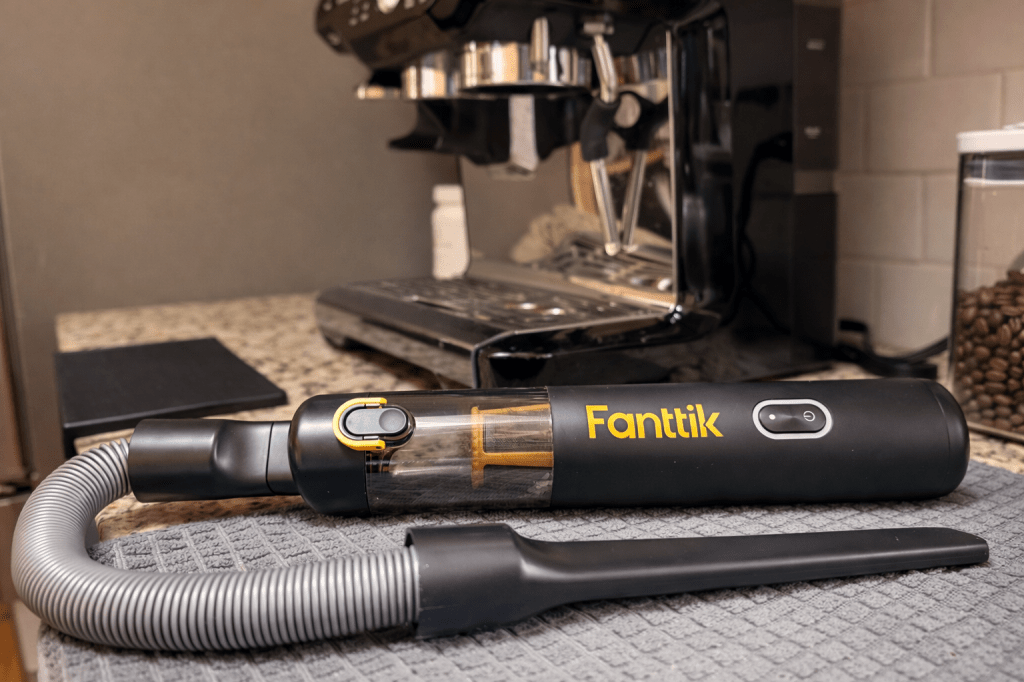
I bought a small vacuum specifically for the machine, and I am not exaggerating when I say it changed my life.
It:
- Cleans the grinder perfectly
- Gets into every nook and cranny
- Makes me feel extremely professional
- Also works shockingly well for detailing my car
If you’re not vacuuming your grinder, you’re leaving flavor (and cleanliness) on the table.
The Daily Stuff That Actually Makes a Difference
Here’s the thing—most espresso maintenance isn’t dramatic. It’s boring. It’s small habits done consistently.
But they matter.
We always:
- Wipe down the machine after use
- Empty the drip tray
- Wash both the grate and tray
Milk residue hardens. Coffee splashes turn sticky. Grounds migrate like ants.
Five minutes of cleanup after brewing saves you from a full “why does my coffee taste weird” spiral later.
The Cleaning Checklist That Keeps Me Honest
Because I clearly cannot be trusted to “remember,” I created a checklist.
Not because I’m Type A—but because espresso machines thrive on routine, and I thrive on not ruining expensive coffee beans.
Here’s the checklist I now follow.
Barista Express Cleaning Checklist
After Every Use
- Wipe down the machine exterior
- Purge and wipe steam wand
- Empty the drip tray if needed
- Rinse portafilter and basket
Daily
- Wash drip tray and grate
- Wipe down group head area
- Vacuum loose grounds around grinder
Weekly
- Deep clean portafilter and baskets
- Vacuum grinder thoroughly
- Check water level and general buildup
Monthly
- Replace water filter (do not be me)
- Run cleaning cycle with cleaning tablet
- Clean water tank
As Needed (or When the Machine Tells You)
- Descale machine
- When descale light flashes
- OR when coffee tastes off
- OR when it’s been a while
Final Thoughts: Clean Machine, Better Coffee, Fewer Regrets
Here’s what I’ve learned:
Most “bad coffee days” aren’t skill issues.
They’re maintenance issues.
Once I:
- Changed the filter monthly
- Descaled when needed
- Used cleaning tablets regularly
- Vacuumed the grinder
- Stayed consistent with wiping and washing
My coffee improved dramatically—without changing beans, grind size, or technique.
Cleaning your Barista Express isn’t about being perfect.
It’s about being intentional.
And maybe setting a reminder so you don’t accidentally ignore a filter for three months.
If this post saves even one person from blaming their beans when it’s really their machine… my work here is done.
Now go clean your espresso machine.
Your coffee deserves it. ☕
About Affiliate Links
Some of the links in this post are affiliate links.
That means if you click a link and make a purchase, I may earn a small commission—at no extra cost to you. I only share products I personally use, trust, and genuinely believe improve the coffee experience.
Affiliate links help support this blog, the videos, the trial-and-error learning curve, and the many cups of coffee it takes to create this content. I truly appreciate your support—it allows me to keep sharing what I’m learning, honestly and transparently.
As always, feel free to ask questions or swap recommendations. Coffee is better when we learn together. ☕🤍
 In Need of Nature
Leave a comment